
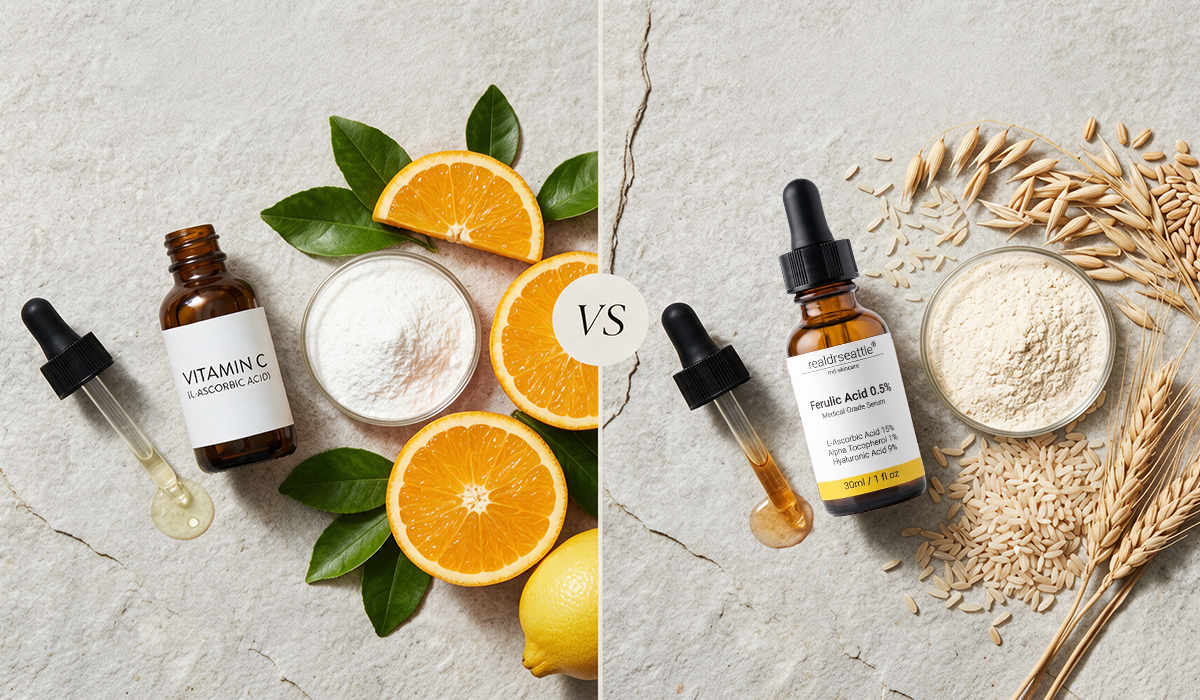
Choosing between ferulic acid vs vitamin C can be confusing when both ingredients offer antioxidant benefits for the skin.
Using the wrong formula or choosing one without understanding its role may mean missing out on benefits such as brighter skin and reduced visible signs of aging.
The good news is that a ferulic acid serum and vitamin C can work together rather than compete. Understanding how vitamin C and ferulic acid differ can help you choose a serum that better supports your skincare goals.
Understanding the Basics of Vitamin C
As one of the most researched ingredients in the skincare industry, vitamin C boasts an impressive list of functions. It’s a potent antioxidant and helps protect the skin from the effects of free radicals. These molecules can contribute to premature aging and damage to the skin, and research has associated oxidative stress with a range of health concerns.
Another benefit of vitamin C is that it helps support the production of collagen in the body.
Collagen is a protein that helps keep our skin firm and healthy-looking. It is also involved in the creation of new skin cells, meaning it supports the skin’s natural repair process. The effects of vitamin C can also be seen in the appearance of the skin, including the fading of dark spots and a more even skin tone. Most topical vitamin C formulations are made with L-ascorbic acid, the most popular and well-studied form of vitamin C.
The downside of this powerhouse ingredient, however, is that it is unstable, degrading upon light exposure and losing potency in the process. This is where the other ingredient, ferulic acid, comes in handy.
What Is Ferulic Acid?
Ferulic acid is an antioxidant compound found in plants such as rice, oats, and apples. In terms of skincare applications, it can function in two capacities. First, like vitamin C, it is a potent antioxidant that helps the skin combat the damaging effects of free radicals.
Beyond that, when used in conjunction with vitamin C, it can help prolong the shelf life of topical vitamin C serums and moisturizers. This is because it has stabilizing properties that may help slow the degradation of vitamin C upon exposure to light and heat. For this reason, ferulic acid is rarely used on its own and is typically paired with other antioxidants such as vitamin C.
Ferulic Acid vs Vitamin C: The Key Differences
Now that we’ve gone over the basic characteristics of each ingredient, let’s do a brief ferulic acid vs vitamin C comparison. Vitamin C is the main active ingredient that delivers its benefits to the skin. Ferulic acid, on the other hand, serves as an auxiliary that helps support the full potential of vitamin C.
To break it down further, vitamin C brightens the skin and helps reduce the look of hyperpigmentation, while ferulic acid helps protect the skin from the harmful effects of free radicals and supports the stability of the formula. Together, their combined effect can be greater than what each ingredient delivers on its own.
| Feature | Vitamin C | Ferulic Acid |
| Primary role | Main active brightener | Stabilizer + antioxidant support |
| Key benefit | Evens tone, fades dark spots | Protects against free radicals, extends shelf life |
| Used alone? | Commonly | Rarely best paired |
| Stability | Unstable (degrades in light/heat) | Helps stabilize vitamin C |
Why Pair Them Together in a Skincare Routine?
As mentioned above, the benefits of combining vitamin C and ferulic acid are two-fold. The two ingredients work together to support the effects of each other. When used in a vitamin C serum with ferulic acid, they offer an array of benefits such as helping combat the signs of aging, brightening one’s complexion, and reducing the appearance of dark spots. A good-quality vitamin C ferulic acid serum can help support all of that and more.
How to Use a Ferulic Acid Serum
A ferulic acid face serum is best applied in the morning. This is because antioxidants help provide the skin with protection throughout the day.
The application is straightforward: after cleansing and patting the skin dry, apply a few drops of the product to the facial area and massage gently until absorbed. It is important to apply a moisturizer after using the serum and to always finish with a good-quality sunscreen. A combination of antioxidant and sunscreen products can provide the skin with better protection against UV rays and free radical damage.
When first using products with ferulic acid, it is best to start by applying the product every other day. The skin may need some time to adjust to the formula before you move to daily use.
Ferulic Acid Serum from Realdrseattle Skincare
At Realdrseattle Skincare, we believe the best products are not only effective but also thoughtfully crafted. Our ferulic acid serum has been formulated by the experienced hands of Dr. Javad Sajan, a qualified facial and cosmetic surgeon.
Understanding the importance of both vitamin C and ferulic acid, he set out to create a product that would combine the benefits of both ingredients into one. The result is a carefully crafted serum designed to be gentle enough for daily use.
This is not just another fad product. The Realdrseattle ferulic acid serum is a quality serum that can help elevate your skincare routine and support radiant, healthy-looking skin. Anyone looking to invest in a quality vitamin C ferulic acid serum should explore the options from Realdrseattle Skincare to find the one that best suits their needs.
Conclusion
Vitamin C is an incredibly potent ingredient when it comes to skincare, offering a wide array of benefits. However, when combined with ferulic acid, the results can be even more impressive. A skincare serum that features both ingredients is a smart way to take advantage of their combined benefits. When choosing a product, it helps to go with a surgeon-formulated formula.
Ready to support a healthier-looking, radiant complexion? Explore the surgeon-formulated ferulic acid serum by Dr. Javad Sajan at Realdrseattle Skincare. We offer a wide variety of quality skincare products to help transform any skincare routine.
FAQs
Is ferulic acid better than vitamin C?
Neither vitamin C nor ferulic acid is universally “better”; both are beneficial in their own way. For best results, vitamin C is often used in tandem with ferulic acid. The latter helps stabilize the former, supporting the potency and shelf life of vitamin C topical preparations.
Can I use a ferulic acid serum every day?
Yes, once your skin has adjusted to regular use. To reduce the chances of irritation, start by using the product every other day before applying it daily in the morning. If you have sensitive skin or any concerns, consult a dermatologist.
Does vitamin C with ferulic acid help dark spots?
It can help. The vitamin C in a vitamin C serum with ferulic acid is known to help reduce the appearance of dark spots and support a more even skin tone.
Can I use this serum with retinol?
Yes, but it’s best to apply the serum in the morning and retinol (retinoic acid) at night to minimize potential irritation.